
Robotics Class Singapore Guide for Parents 2026
Singapore has no shortage of enrichment classes. Robotics, coding, STEM and maker workshops fill many weekend schedules, so choosing a robotics class in Singapore can feel confusing. Not all programmes deliver the same value, and not all match what parents hope their children will gain.
Some sessions feel like playdates with LEGO, while others follow a clear curriculum that builds coding, math and problem-solving. The right robotics class in Singapore mixes fun with structure so children actually grow. This guide explains what that looks like, how to evaluate any provider, and where Meta Robotics and MetaRobotics fit in.
By the end, you will know what questions to ask, what red flags to watch for, and how to book a low-risk trial before you commit.
Key Takeaways
- A good robotics class in Singapore uses clear, age-appropriate curriculum tiers so a six-year-old and a twelve-year-old are never doing the same project. This keeps younger learners confident and older learners challenged, instead of bored or lost. Parents can look for named levels and visible pathways from beginner to advanced.
- Hands-on building matters more than endless screen time, because children learn best when their code moves a real robot. Classes that combine physical construction with coding create stronger understanding than screen-only lessons. Research from the IEEE links hands-on robotics with higher retention of key concepts, supported by studies such as experiential versus conventional teaching methods in STEM subjects.
- MOE alignment and progress transparency help parents see real value over time. When a programme supports the Ministry of Education syllabus and reports weekly progress, it fits more naturally with school. Meta Robotics uses this approach so parents know what skills grow each term.
- Qualified instructors and small class sizes give children the attention they need when a robot fails or code breaks. Trained teachers spot misconceptions quickly and guide children through fixing them. This support builds confidence as well as technical skills.
- Meta Robotics, also known as MetaRobotics, offers a structured, results-focused option that combines all these elements. Its NEBULA™ Neuro-Builder model links thinking with doing in every project. That balance helps children build long-term understanding, not just one-off cool builds.
What Does a Quality Robotics Class in Singapore Actually Include?
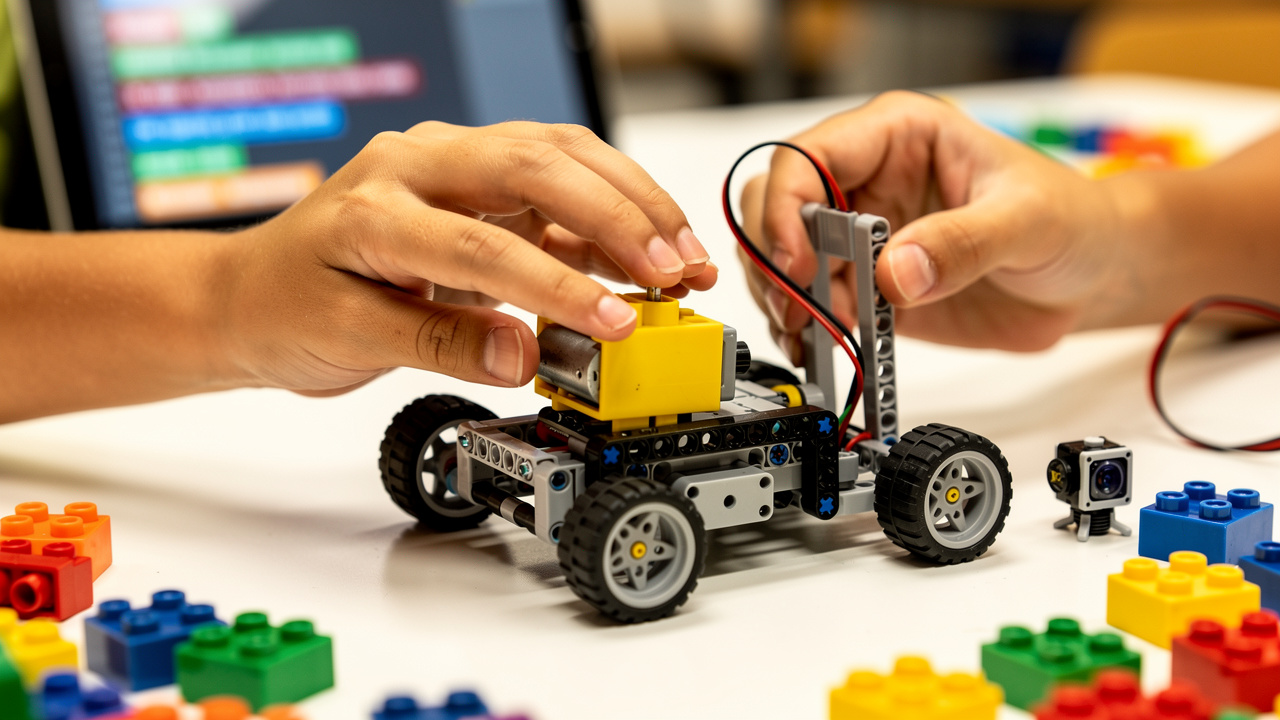
A quality robotics class in Singapore combines an age-based curriculum, real robots, and clear learning outcomes. Parents should expect much more than free play with kits. At its core, a strong class teaches children how to think logically, design, code and test their ideas.
The first sign of quality is a structured, age-appropriate curriculum. Five-year-olds work very differently from eleven-year-olds, so one generic session for everyone is a warning sign. Look for named levels and written outcomes, such as Meta Robotics Starter, High Ranker, Ace and King programmes, that step children from basics to advanced work. This type of design mirrors how leading groups like the Harvard Graduate School of Education describe effective STEM progression.
In a strong robotics enrichment class, parents can usually see:
- Curriculum structure: Clear themes, modules and projects for each term
- Hands-on building: Regular use of real components, not just simulations
- Coding integration: Visual or text-based coding linked directly to robot movement
- Age-appropriate progression: Different levels for different age bands
- Reflection and assessment: Projects children can explain and build on
-
Next, the class should use real, physical robots and engineering challenges. Students should build using LEGO elements, sensors and motors, and program robots to follow lines, avoid obstacles or complete missions on a mat. Tools such as Sphero, Ozobot and LEGO-based kits signal a practical environment where children see immediate results from their code. According to the IEEE Robotics and Automation Society, hands-on robotics can raise retention of engineering ideas by around 30 percent compared with theory-only lessons.
A good robotics class also weaves Science, Technology, Engineering, Arts and Math (STEAM) together. Lessons might touch on angles when turning a robot, friction when climbing a slope, or sequences when coding. Programmes like Meta Robotics use this STEAM approach so children apply school topics in real situations. Parents should be able to view sample lesson plans that show this connection, rather than vague promises about “STEM exposure.”
Finally, check for assessment and reflection built into each level. Children should finish a module with projects they can explain in their own words. At Meta Robotics, the NEBULA™ Neuro-Builder model encourages students to plan, build, test and explain every robot. That cycle helps children remember concepts long after a single class ends and gives parents a concrete way to talk about what was learned.
How Do You Know If a Robotics Programme Is the Right Fit for Your Child?
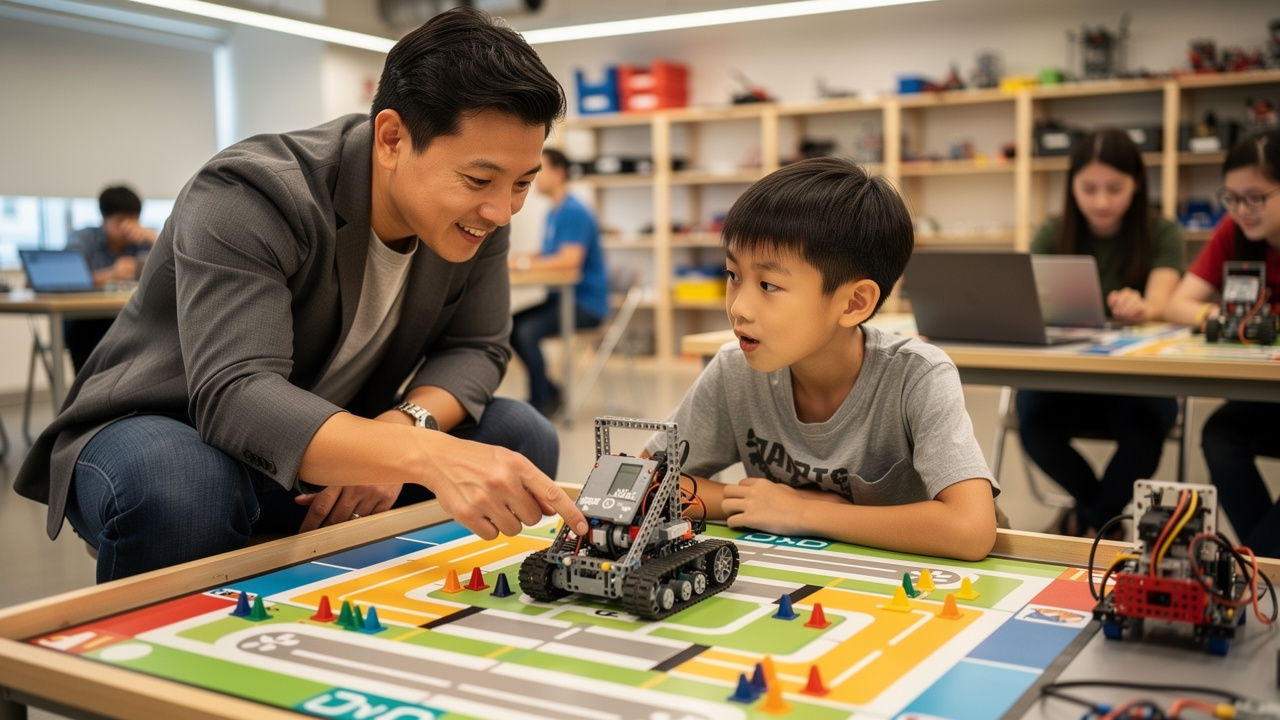
A robotics programme is the right fit for your child when its structure, teaching style and pace match your child's age and personality. The best robotics class in Singapore feels fun to your child, yet still stretches their thinking. Fit comes from both curriculum design and how the centre supports families.
Before signing up, it helps to approach each provider with a simple checklist. You are not being fussy; you are protecting your child's time and your budget. When a centre can answer clearly, it usually reflects strong internal planning. Meta Robotics builds its programmes with this level of clarity in mind.
Here is a practical set of questions parents can use when comparing options:
- Ask about class size and student-to-teacher ratio, because this affects how quickly your child gets help when stuck. Smaller groups allow instructors to walk each child through debugging and redesign, rather than rushing. Meta Robotics keeps classes modest in size so teachers can watch both building and coding closely.
- Ask who teaches the classes and what training they have, including whether instructors hold recognition with Singapore's Ministry of Education. MOE-aligned or MOE-trained educators understand local school expectations and child development. This kind of teacher is more likely to connect robotics to current science and math topics.
- Ask how progress is tracked and shared with parents, so you are not guessing after each lesson. A written report, badge system or app is far better than “your child had fun today” alone. Meta Robotics uses a parent app that records weekly skills, from first loops to more complex logic.
- Ask about trial lessons and placement, instead of accepting a fixed starting level. A short trial lets your child meet the teacher and try the tools without pressure. Meta Robotics offers trial classes so children experience the environment before joining a full term.
It also helps to separate play-based robot kits at home from structured robotics education. A kit encourages open play, which is lovely, but progress is random and depends on parent guidance.
By contrast, a structured programme like Meta Robotics uses planned tiers such as Starter, High Ranker, Ace and King, so each week builds on the previous one. Over months, this sequence turns scattered interest into real skill. Research from Ng et al. in the Journal of STEM Education links such planned, hands-on methods with up to 40 percent higher STEM engagement among young learners.
What Age Should Your Child Start a Robotics Class in Singapore?

Most children are ready for a beginner robotics class in Singapore between ages five and seven, but older starters can still gain plenty. Early exposure gives more time to build habits, yet it is never too late to begin. The key is choosing an entry point that matches your child's current stage, not their birth year alone.
Research from the National University of Singapore reports that early STEM exposure can increase innovation-related skills by about 30 percent. A study from the National Institute of Education also links play-based STEM activities with stronger problem-solving in children. These findings support starting robotics early, as long as lessons feel playful and not like extra homework.
For younger children around ages five to six, look for programmes that highlight:
- Exploration and simple building
- Story-based challenges with characters and themes
- Short instructions and frequent movement
Meta Robotics Starter Programme uses coding cards, large building pieces and guided play to introduce Science, Math, Coding and Design. Sessions keep instructions short and movement frequent so children stay focused. At this age, the goal is comfort with concepts such as sequence, cause and effect, and simple measurement.
Children aged seven to nine can usually handle more structured building and visual coding. Meta Robotics High Ranker Programme adds Robotics STEM, Robotics Coding, and Games and Animation Computing. Students might program line-following robots or design simple games that mirror their robots' actions. This blend keeps both logical and creative sides active.
For ages ten to twelve and teens, it is fine to join even with no prior experience. Older beginners can start in Ace or King programmes at Meta Robotics, which combine robotics projects with text-based coding and machine learning ideas. Teachers can move faster through the basics while still filling any gaps. Older students also tend to enjoy competition-style challenges that link to events across Singapore.
As a quick guide, think of:
- Ages 5–6: playful foundations and simple concepts
- Ages 7–9: structured building plus visual coding
- Ages 10+: deeper dives into advanced projects, competitions and text-based coding
Matching your child's starting point to these broad bands helps them feel capable from the first class and reduces the chance of frustration.
Why Meta Robotics Stands Out Among Robotics Classes in Singapore
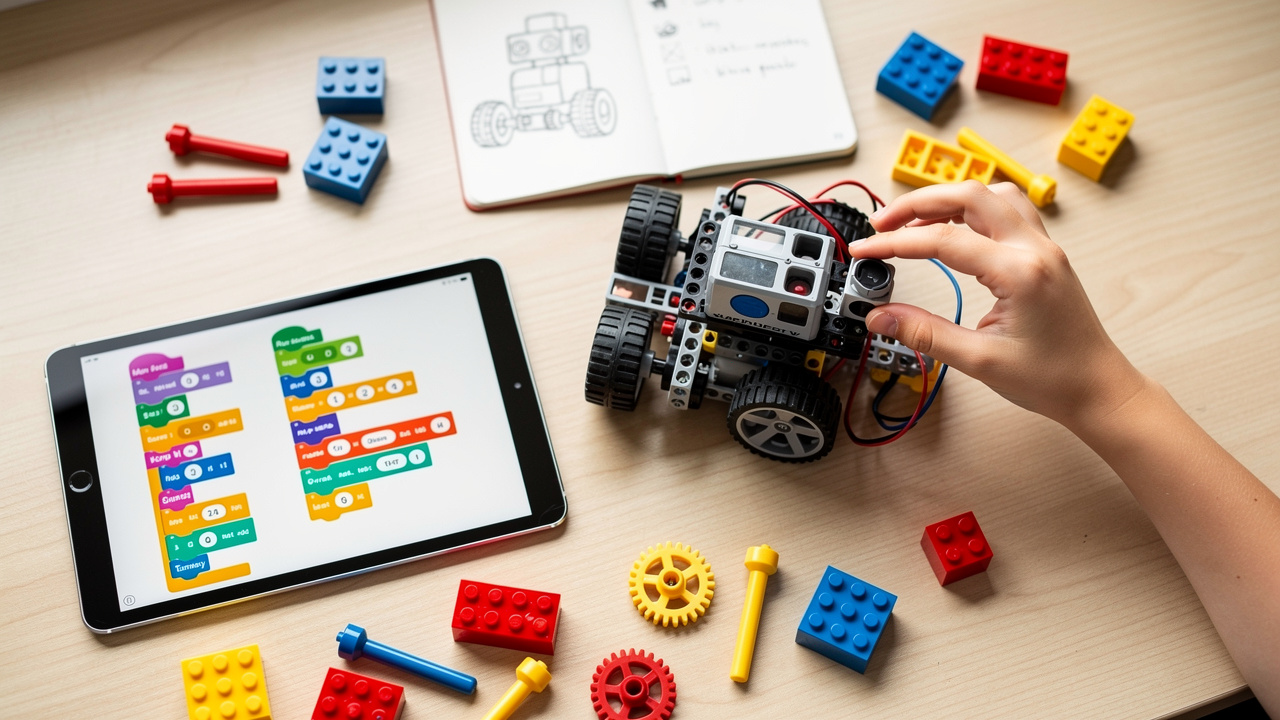
Meta Robotics stands out among robotics classes in Singapore because it ties age-based curriculum, MOE collaboration, and real-time progress tracking into one system. Instead of random projects, children follow a clear path from Starter to King, with each level reinforcing Science, Math, Coding, Design and Technology. For parents, this brings order to the busy enrichment scene.
The curriculum at Meta Robotics is developed to support the goals of Singapore's Ministry of Education and national moves like the Smart Nation and SkillsFuture programmes. Lessons reinforce school topics, such as fractions through wheel turns or data handling through simple sensors. This means time spent at Meta Robotics directly supports classroom learning. Studies cited by the National Science Foundation show that such applied STEM experiences can improve spatial reasoning and creativity in children by around 30 percent.
MetaRobotics is built on the idea that learning is strongest when thinking and doing work together. The NEBULA™ Neuro-Builder model guides children through structured robotics and engineering challenges that build logic and long-term understanding. Children plan their design, build the robot, code its actions and then test, fix and improve — a cycle that reflects improving student learning through project-based integrated robotics teaching. They might create delivery robots, simple factory sorters or maze explorers. This cycle trains logical reasoning and persistence, skills that carry into every subject. Hands-on robotics of this kind has been linked by the IEEE Robotics and Automation Society with roughly 30 percent higher retention of engineering ideas.
Parents gain strong visibility into this learning. Meta Robotics and MetaRobotics provide a user-friendly app where you can see weekly updates on coding concepts, from first loops to more complex conditionals. Small class sizes mean instructors can give personal feedback, not just generic comments.
As students progress, they can:
- Sit for recognised certificates
- Join competition preparation tracks
- Attend Holiday Workshops that give intensive project time during school breaks
The overall result is a structured, transparent option that fits neatly within Singapore's broader education goals while still keeping lessons fun and hands-on.
Start With a Trial - Here's Your Next Step

The right robotics class in Singapore blends age-appropriate curriculum, hands-on building, thoughtful coding practice and teachers who know how to guide children. Reading about programmes helps, but nothing replaces seeing your child in an actual lesson. A short, low-commitment trial is the safest way to test fit.
Meta Robotics offers trial classes so families can watch the NEBULA™ Neuro-Builder model in action and ask detailed questions. During a trial, you can observe how instructors interact with students, how much real building and coding happens, and how progress will be reported. Booking a session with Meta Robotics or MetaRobotics lets you make an informed choice before enrolling for a full term.
Next step: Visit the Meta Robotics website or contact the centre directly to book a trial robotics class in Singapore for your child. Bring your questions, watch your child’s reaction, and use what you see to decide if the programme is right for your family.
Conclusion
Choosing a robotics class in Singapore is really about choosing how your child will learn to think with technology. A strong programme gives structure, age-based progression and real engineering practice, instead of only screen time or unplanned play. Over months, this steady path builds confidence along with coding and problem-solving skills.
Parents can use clear questions on class size, teacher background, curriculum levels and progress tracking to compare options. Research from groups like the National University of Singapore, the National Institute of Education and the IEEE supports hands-on, play-informed STEM as a powerful way to grow innovation and resilience.
Meta Robotics stands out because it brings these research-backed ideas together in one place. With MOE-aligned design, the NEBULA™ Neuro-Builder approach and transparent reporting, it offers a thoughtful path from first robot to advanced projects. A simple trial lesson is the next practical step to see how well the fit works for your child.
Frequently Asked Questions
Before the detailed answers, here are quick responses to common concerns parents share. These short explanations are meant to stand alone, so you can read any one of them without the rest of the guide.
Question: What is the difference between a robotics class and a coding class in Singapore?
A robotics class combines physical building with coding so children write programs that control real robots. A coding class usually focuses on software only, often on screen. Many strong programmes, including Meta Robotics, blend both so students see how digital logic affects physical movement.
Question: How do I know if a robotics class in Singapore is aligned with the MOE curriculum?
You can check whether the provider clearly states alignment with MOE goals or support for SkillsFuture on its site. Ask how lessons link to school Science, Math and Computing topics. Meta Robotics curriculum is developed to support Singapore's Ministry of Education objectives and is designed to reinforce classroom learning.
Question: Are robotics classes in Singapore worth the investment?
Yes, when they use real robots and structured curriculum, they give strong returns. Research from the National University of Singapore reports around 30 percent higher innovation skills with early STEM exposure, while IEEE studies link hands-on robotics with roughly 30 percent higher retention. These gains support later STEM learning.
Question: Can my child join a robotics class with no prior experience?
Yes, beginners are welcome at many centres. Meta Robotics Starter Programme for ages five to six is designed for children with zero background, using block-based coding, coding cards and simple builds. Older beginners can join higher tiers with extra guidance at the start.
Question: What should I bring or prepare for my child's first robotics class?
Most reputable programmes supply LEGO kits, robots, sensors and access to coding platforms, so you mainly bring your child and basic stationery. Before the trial, prepare a few questions about curriculum progression, class size and progress tracking tools so you leave with clear answers.