
Robotics Competition Singapore Guide for Parents 2026
Your child just told you they want to join a robotics competition Singapore event, and now you're wondering where to begin. Maybe they saw seniors testing robots in the school hall, or watched a cool clip of kids competing on YouTube. That small spark of interest can grow into real skills if you guide it well.
Robotics competitions do more than test what children can build. They stretch how they think, how they work with others, and how they handle time pressure on a real field. With the right preparation, a robotics competition Singapore experience becomes a safe way to build confidence instead of a scary test.
This guide walks through what these competitions involve, the skills your child can gain, and how a structured robotics class Singapore or coding class Singapore programme turns raw interest into readiness. You'll also see how MetaRobotics and its NEBULA™ Neuro Builder model prepare children for real competition environments. MetaRobotics is built on the idea that learning is strongest when thinking and doing work together, so every lesson connects clear thinking with hands-on building.
Key Takeaways
- Robotics competitions in Singapore combine building, coding, and teamwork under clear rules and missions. Events feel exciting but structured and age-appropriate.
- Competitive robotics builds problem solving, coding logic, and engineering thinking. Children also practise teamwork and leadership, and these skills carry into school and future careers.
- Structured robotics and coding programmes prepare children step by step. Classes mirror real competition hardware and rules. MetaRobotics uses this approach for kids robotics Singapore preparation.
- Parents can look for small classes, clear progression, and real hardware practice. Programmes should welcome beginners and include mock matches and problem solving time.
- MetaRobotics uses the NEBULA™ Neuro Builder model. Lessons link thinking with doing in every activity, building logic and long-term understanding. This gives children a calm, prepared mindset for competition day.
What Does a Robotics Competition in Singapore Actually Involve?

A robotics competition in Singapore is a structured event where teams build and program robots to complete missions on a field. When parents hear the phrase robotics competition Singapore, they can picture timed matches, clear rules, and lots of teamwork.
Singapore has three main platforms for school-aged children:
- National Robotics Competition (NRC), run by Science Centre Singapore and the Ministry of Education, which starts from preschool level and goes up to junior college.
- FIRST LEGO League (FLL) Singapore, which focuses on STEAM learning and runs divisions for younger and older primary students.
- VEX Robotics Competition Singapore, which offers VEX IQ for ages around nine to fourteen and VEX V5 matches for secondary students.
Each platform mixes two broad styles:
- Challenge-based events, like the NRC Regular Category, FLL robot game, and VEX matches, use a fixed field where robots earn points by finishing tasks.
- Project-based events, such as the NRC Open Category and FLL Innovation Project, ask teams to design and present a robotics project linked to a yearly theme.
Across these events, students often work with LEGO SPIKE Prime, LEGO EV3, LEGO SPIKE Essential, VEX IQ, or VEX V5 hardware, and use block coding or text-based languages. According to Science Centre Singapore, the National Robotics Competition has involved more than 68,000 participants since 1999, which shows how common these events are.
On competition day, your child’s team will follow a clear but exciting routine:
- Teams of two to five students check in, set up in a pit area, and run practice trials. They learn to read score sheets, follow the rulebook, and manage batteries and laptops calmly.
- A coach or mentor supports them from the sidelines. The adult gives feedback between rounds, helps them read updates, and reminds them to stay within safety rules while still trying new ideas.
- During matches, robots must run within a set time, often two or three minutes. Children reset quickly between rounds, fix code or hardware under pressure, and talk to friendly judges about their design choices.
These events are designed as growth experiences for children. Winning medals matters less than learning how to handle pressure, bounce back from mistakes, and stay curious about technology.
What Skills Does Competitive Robotics Build in Children?
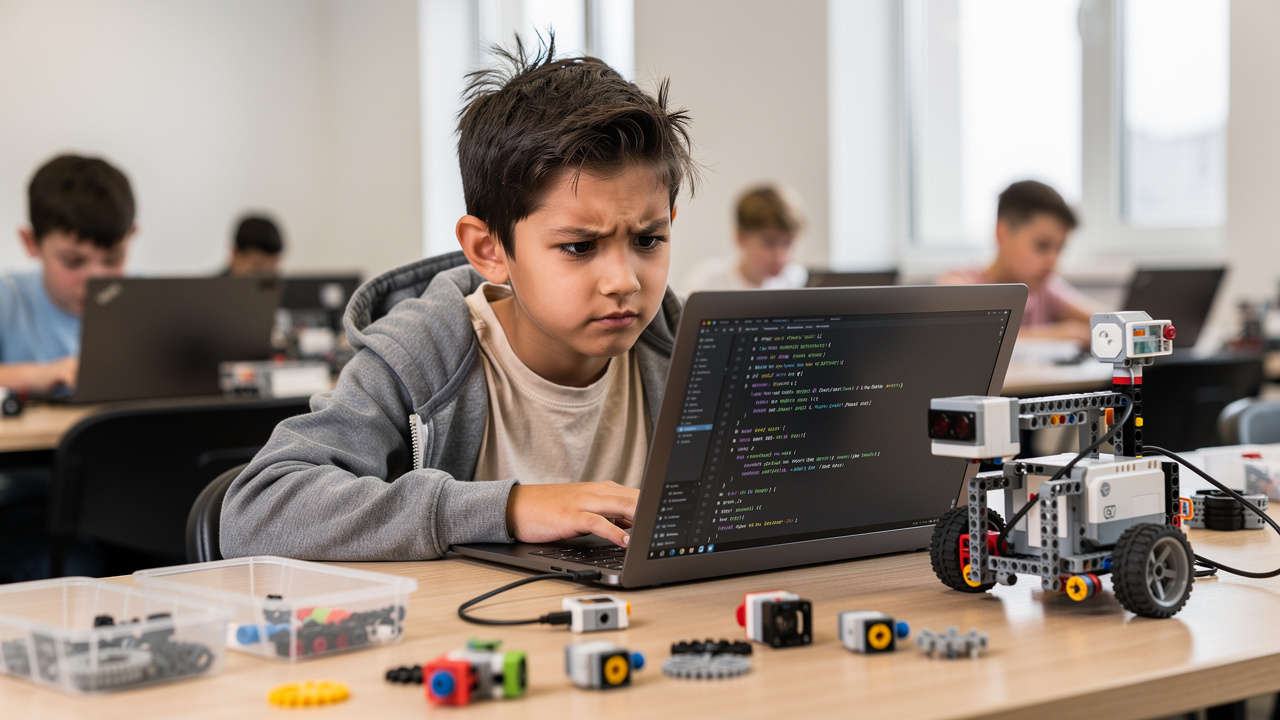
Competitive robotics builds a mix of technical and personal skills that can shape a child for years. Through a robotics competition Singapore season, children learn to think like young engineers while also growing as teammates and leaders.
On the technical side, students practise clear coding logic. Younger children use block-based tools like Scratch or LEGO SPIKE software to control motors and sensors. Older students move into text-based languages such as Python, tuning speed, loops, and decisions so a robot can react on its own. Research from the National Science Foundation reports that hands-on robotics activities improve problem solving abilities in young learners by about 30 percent, which matches what many parents see at home.
They also learn engineering design thinking. Children design robot frames, test different gear ratios, and decide where to place sensors so the robot drives straight and scores points. They debug under pressure when something breaks in the middle of a match. A study on integrated robotics lessons by Ng and colleagues in the Journal of STEM Education Journal of STEM Education found that this kind of practical work can raise student engagement with STEM by up to 40 percent.
Several core skill groups grow together through competitions:
- Thinking skills grow as children plan strategies, predict scores, and adjust when the field or rules change. They practise breaking big missions into small steps, which also helps in math and science lessons.
- Coding and engineering skills deepen as students link code blocks or Python functions to actual motors, arms, and wheels. They see how a small bug changes the robot’s movement, so they learn to test changes carefully.
- Mindset skills develop as they learn that every failed run is data. They reflect on what went wrong, try again, and slowly build a habit of steady improvement.
Soft skills grow just as strongly. Children must share roles, speak up in team meetings, and present to judges and teachers. FIRST LEGO League global data shows that 81 percent of alumni choose STEM-related majors and 83 percent feel ready to take leadership roles in school FIRST. VEX Robotics reports that 95 percent of its participants show higher interest in STEM subjects and careers after competing VEX Robotics. For parents, those numbers show that a season of kids robotics Singapore training can support both grades and long-term career paths.
How Do Structured Robotics Classes Build Competition Ready Kids?

Structured robotics classes build competition-ready kids by giving them a safe place to learn skills before they ever step onto a field. A good robotics class Singapore programme breaks big competition tasks into weekly lessons that feel manageable and fun.
Beginners start with simple goals such as moving a robot in a square or following a line, and parental interaction and extracurricular activity data from the U.S. Census Bureau shows that children whose parents actively support structured activities demonstrate stronger school engagement over time. They use friendly tools like Scratch coding programs or LEGO block coding, often first on a laptop and then on the robot itself. Over time, they move into more advanced coding class Singapore work, such as using variables, functions, and even Python, so ideas from math and science class now drive the robot. Scratch, created at the MIT Media Lab, is a popular starting point because children can see results quickly.
Strong programmes build skills layer by layer:
- Lessons follow a clear progression, from basic movement to sensor-based navigation and simple automation. Children repeat ideas in fresh tasks so concepts stick, which is very different from a one-off workshop.
- Classes include mini challenges that feel like small competitions. Students race to complete a mission, explain their design, or debug a tricky bug, which prepares them for the time pressure of live events.
- Teachers introduce teamwork early through pair programming and shared builds. Children learn how to switch roles between builder, coder, and tester, so no one is lost on competition day.
Parents often worry that their child understands theory but freezes in real matches. Structured classes close that gap. Instructors guide children through healthy debugging habits, like changing only one line of code at a time or testing one module before joining pieces together. Research from the National University of Singapore links early hands-on STEM experiences with about 30 percent higher innovation skills, which supports this style of teaching.
By the time competition season starts, students who have attended steady classes already know the hardware platforms, the language of missions and points, and how to stay calm while a robot runs. That preparation turns a robotics competition Singapore event from a shock into a familiar extension of what they already practise every week.
How MetaRobotics Prepares Your Child for a Robotics Competition in Singapore

MetaRobotics prepares your child for a robotics competition Singapore experience by combining age-appropriate classes, real competition hardware, and structured practice that mirrors national events. The focus is not just on building robots, but on helping children think clearly and act confidently under pressure.
Programmes at MetaRobotics are grouped by age so children learn beside peers with similar needs.
- The Starter level, for ages five to seven, introduces block-based coding and simple robots through playful activities.
- The High Ranker level for ages seven to nine adds Robotics STEM, Robotics Coding, and Games and Animation Computing modules that stretch science and math skills.
- The Ace level for ages ten to twelve and the King level for teens include robotics, machine learning, and more advanced coding, supported by school holiday workshops for extra practice.
MetaRobotics uses the same types of kits that appear in major competitions. Children build with LEGO EV3 and LEGO SPIKE sets, similar to those used in the National Robotics Competition, FIRST LEGO League, and events like RoboCup Singapore and the World Robot Olympiad. Coding moves from block-based tools to Python as students progress, so they can later tackle advanced categories such as AI-themed challenges and autonomous navigation.
Several teaching habits at MetaRobotics line up directly with competition needs:
- Classes use mock competition fields and practice runs that follow formats from NRC, FLL, and VEX. Children learn to read rulebooks, plan match strategies, and test robots against timers, so competition rules feel familiar.
- Lessons run in small groups, which gives each student time with the robot and with the teacher. This supports shy children who need more guidance and lets keen students explore extra building ideas without holding the group back.
- The atmosphere is playful but structured. Activities feel like games, yet every build links back to a clear learning target. Children leave class tired but proud of real progress, which keeps them coming back week after week.
Behind this approach is the NEBULA™ Neuro Builder model that MetaRobotics uses across its courses. NEBULA™ sequences challenges so that thinking and doing always happen together. MetaRobotics turns that research into weekly lessons that build logic and long-term understanding, so children can walk into any robotics competition Singapore event feeling ready, not lost.
Making Competition a Growth Experience, Not Just a Goal
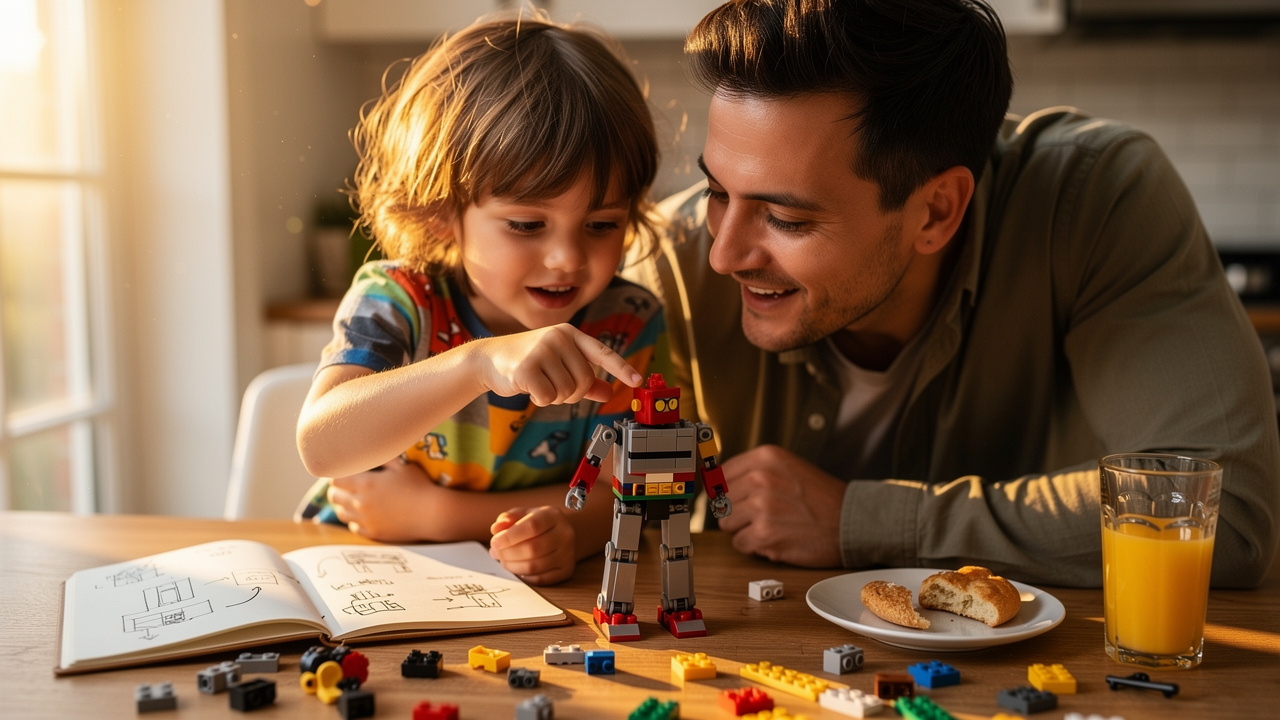
Turning a robotics competition in Singapore into a growth experience means focusing on skills and effort, not only on medals. When parents frame a robotics competition Singapore season as practice for life, children feel safer to experiment and learn from each run.
The coding, problem solving, and teamwork that grow through competitions help in school projects, Direct School Admission portfolios, and later in fields such as artificial intelligence, engineering, and automation. Singapore’s Smart Nation vision highlights how much practical tech talent the country needs Smart Nation Singapore, so early exposure has real long-term value.
If you want your child to start on this path, a structured programme like MetaRobotics offers a clear first step. Your child can try a Starter, High Ranker, Ace, or King class, explore robots in a guided setting, and then move into competitions when ready. The first class can be the moment they start seeing themselves as a problem solver, not just a student.
Frequently Asked Questions
What age can my child start preparing for a robotics competition in Singapore?
Children can start preparing for robotics competitions in Singapore from as young as five or six, through events like the NRC Preschool KUBO Challenge. MetaRobotics offers a Starter Programme from age five that uses block-based coding and play-based learning to build early logic. Early exposure gives a strong base for later primary school categories.
Does my child need prior coding or robotics experience to join a competition?
No, prior coding or robotics experience is not required for beginner categories or starter classes. MetaRobotics welcomes complete beginners and structures lessons so children pick up basics step by step. Instructors guide students through building, coding, and simple debugging before they attempt full competition missions.
Which robotics competition in Singapore is best for primary school students?
For primary students, strong choices include NRC Lower and Upper Primary, FLL Explore for ages six to ten, and FLL Challenge from ages nine upward. The best fit depends on age, current skill level, and whether your child prefers fixed field challenges or project presentations. A structured robotics class Singapore programme like MetaRobotics can help families choose.
How does participating in robotics competitions help with DSA applications?
Robotics competition experience strengthens Direct School Admission applications because it shows real skills in coding, engineering design, teamwork, and leadership. Schools value long-term commitment, so a track record of training and events matters more than one short course. Keeping an engineering notebook and certificates from events adds clear evidence to a student portfolio.
How long does it take to prepare a child for a robotics competition in Singapore?
Answer: Preparation time depends on the child’s starting point and the competition level, but many families plan several months. Weekly classes, combined with holiday workshops, let children move from simple builds to full missions at a steady pace. MetaRobotics offers both regular sessions and intensive camps to match different timelines and schedules.
How can I enrol my child with MetaRobotics for robotics competition training?
You can contact MetaRobotics through its website or visit a centre to book a trial class. Talk with the coaches about your child’s age, interests, and timetable, then choose a Starter, High Ranker, Ace, or King class that fits. From there, regular lessons, mock matches, and holiday workshops will help your child grow skills and confidence, so you can enrol your child and begin their robotics journey.