
How Robotics Competition Singapore Builds Team Collaboration Skills
Picture rallying a team of children in Singapore to construct a robot that triumphs over competitive challenges, all while honing their teamwork skills. Robotics Competition Singapore, powered by Meta Robotics' coding abilities classes, transforms young minds into unified teams through practical projects, robotics competitions, mentor guidance, and community outreach. From designating roles in building and coding to rigorous testing for optimal performance, explore effective strategies, notable results, and guidance on how to participate.
Key Takeaways:
- Robotics competitions in Singapore foster teamwork through assigned team roles in construction, building coding, programming, and outreach, ensuring every member contributes uniquely to robotic creations.
- Practice sessions and workshops emphasize efficiency, accuracy, and iterative testing, building trust and communication as teams refine their robots under pressure.
- Mentorship and diverse teams provide real-world experience, enhancing problem-solving skills and long-term collaboration applicable beyond competitions.
Collaborative Projects
Collaborative projects in robotics are where the magic happens, as kids team up to brainstorm robot design and iterate through mechanical design challenges using iterative design. In Meta Robotics classes in Singapore, students dive into hands-on tasks that build STEM skills. These projects turn ideas into working robotic creations.
Teams assign team roles early, such as builder, coder, and tester, to avoid a silo mentality. Through creative building with tools like Lego EV3 or Spike, they practice iterative design. This fosters team dynamics and ensures everyone contributes.
Collaborative decision making shines during practice testing on a competition field. Kids refine robot programming using Blockly coding or Python C++, focusing on robot efficiency and accuracy precision. Mentor guidance helps align efforts with competition rules.
Projects mimic real National Robotics Competition (NRC) scenarios, like RoboCup Singapore or FIRST Robotics. Students tackle problem-solving skills through sensor calibration and robot app integration. This experiential learning boosts effective communication and life skills.
Competition
Singapore's robotics competitions, from NRC to RoboCup Singapore and FIRST Robotics Competition (FRC), throw kids into thrilling competitive challenges on the competition field.
These events follow strict competition rules set by organizers like the Ministry of Education and IEEE events. Teams build and program robots to complete tasks such as navigating obstacles or scoring points. The structure tests team roles in mechanical design, robot programming, and sensor calibration.
In FIRST Robotics Competition (FRC), teams face a seasonal game with specific moves on a precise test track. Meta Robotics preps teams through mock competitions and workshops training, focusing on iterative design and practice testing. This preparation boosts robot efficiency, accuracy, and precision under pressure.
Competitions like RoboCup Singapore emphasize AI technologies, Artificial Intelligence, and machine learning for autonomous robotic actions. Teams practice resource management and collaborative decision making to meet project objectives. Such experiences sharpen problem-solving skills and build lasting teamwork, applicable to Science and Technology League.
Competition Structure and Rules
The national robotics competition in Singapore features a clear structure with qualification rounds, semifinals, and finals. Competition rules dictate robot design limits, like size and materials from team kits, ensuring fair play. Teams must verify compliance through security verification, bot verification, and security service processes with bot protection against malicious bots.
Events incorporate LEGO EV3, SPIKE (LEGO Spike), and advanced sensors for building coding challenges. Rules promote safety, including Bluetooth connection standards and bot protection against malicious bots. This setup teaches attention to detail and adherence to guidelines.
Meta Robotics aligns training with these rules via hands on process in 3D instructions and 360° instructions. Participants learn coding abilities in Python, C++, or Blockly coding through the coding menu. Structured practice enhances team dynamics and prepares for real competition field demands.
Preparing for FIRST Robotics and Beyond
Meta Robotics equips teams for FIRST Robotics by simulating competitive challenges with robot app integration and robot revolution themes. Mentor guidance covers mechanical design, effective communication, and delegation skills based on individual strengths. This fosters critical thinking and life skills.
Training includes workshops training on cobots, collaborative robots (COBOTS), and robotics trends. Teams engage in creative building and iterative design to optimize robotic creations. Practice testing refines accuracy precision for specific moves on mock tracks.
Beyond FRC, prep extends to ROBEL Prize and RoboCup Singapore, building DSA portfolio (Direct School Admission (DSA)) strengths. Focus on experiential learning improves STEM skills and STEM education learning outcomes. Teams emerge ready for national robotics competition success with strong problem solving, critical thinking, and teamwork.
Mentorship
Mentorship is key in robotics competitions, with expert guidance from research scientists and mentors like Dean Kamen and Dr. Woodie Flowers.
In Meta Robotics workshops training, these mentors provide hands on process support during mock competitions. They help teams navigate competition rules and refine robot design for the competition field.
Mentor guidance focuses on problem-solving skills by guiding iterative design processes. For example, they teach teams to adjust sensor calibration for better robot efficiency and accuracy precision in tasks like navigating a precise test track.
This guidance extends to life skills such as effective communication and team dynamics. Mentors encourage collaborative decision making to avoid silo mentality and promote delegation skills based on individual strengths.
Through experiential learning in workshops, teams practice robot programming with tools like Lego EV3, Spike, or Python C++. Mentors review practice testing outcomes to build critical thinking and prepare for events like RoboCup Singapore or First Robotics.
Diversity
Diversity in teams brings unique individual strengths to the table, enhancing delegation skills and effective communication. In Singapore's national robotics competition, teams often include students with varied backgrounds, from coding enthusiasts to creative builders. This mix fosters teamwork by encouraging members to share distinct perspectives on robot design and problem-solving skills.
Resource management improves as diverse groups assign team roles based on individual strengths, such as one member handling robot programming in Python or C++ while another focuses on mechanical design. During RoboCup Singapore or FIRST Robotics events, participants learn to allocate limited team kits like LEGO EV3 or Spike efficiently. This approach avoids a silo mentality and promotes collaborative decision making.
Leveraging strengths shines in iterative design phases, where a student skilled in machine learning integrates advanced sensors, and a detail-oriented peer ensures sensor calibration for accuracy precision. Mentor guidance from Ministry of Education workshops helps teams navigate competition rules and practice testing on mock fields. Such dynamics build life skills through hands-on experiential learning.
Teams practicing mock competitions refine team dynamics by rotating roles in building coding and robot efficiency tests. Diverse input leads to innovative robotic creations, like cobots with AI technologies for specific moves on a precise test track. This process strengthens critical thinking and prepares participants for real robotics competitions.
Real-World Experience
Robotics offers real-world experience through experiential learning aligned with robotics trends like AI technologies and collaborative robots (COBOTS).
Meta Robotics classes in Singapore connect students to practical applications by simulating national robotics competition scenarios. Participants build and program robots using LEGO EV3 or Spike kits, mirroring challenges in RoboCup Singapore and FIRST Robotics events.
Advanced sensors and sensor calibration teach precision in real environments, such as navigating a competition field with obstacles. Students practice iterative design to improve robot efficiency and accuracy, fostering skills like mechanical design and robot programming.
The Robot Revolution (Robot App) curriculum integrates machine learning basics through Python or C++, preparing teams for IEEE events. Hands-on workshops emphasize team roles, delegation skills, and effective communication to tackle competitive challenges.
Advanced Sensors in Action
Advanced sensors in Meta Robotics classes provide hands on process experience with real-world detection tasks. Students calibrate sensors for color recognition or distance measurement, essential for robotics competitions in Singapore.
During practice testing on a precise test track, teams adjust for accuracy precision, learning to handle variables like lighting changes with attention to detail. This builds problem-solving skills and attention to detail.
Examples include programming a robot to follow specific moves using ultrasonic sensors, simulating industrial quality checks. Mentor guidance ensures proper Bluetooth connection and robotic actions.
Robot Revolution and COBOTS
The Robot Revolution program introduces collaborative robots, or COBOTS, through team kits and Blockly coding. Students design robots that work together, reflecting factory automation trends.
Teams engage in mock competitions with competition rules from the Ministry of Education, focusing on collaborative decision making and resource management. This counters silo mentality by promoting team dynamics.
Practical tasks involve creative building for 360 instructions challenge via the Robot App, enhancing coding abilities and STEM skills. Outcomes prepare participants for ROBEL Prize levels.
AI Technologies Integration
Artificial Intelligence technologies enter Meta Robotics via simple Machine Learning models in robot programming. Students code behaviors for adaptive responses, like avoiding malicious bots in a website security scenario.
Workshops cover Python, C++ for AI-driven pathfinding, linking to research scientists' tools. This experiential learning boosts critical thinking and life skills.
Teams test robotic creations in a competitive challenge, refining through iterative design and hands-on process. It builds a DSA portfolio with real project objectives.
Gather a Team and Assign Roles
Start by gathering a team and assigning roles using the team kit to optimize team dynamics. This approach sets a strong foundation for the national robotics competition in Singapore. It ensures everyone contributes based on their strengths from the start.
The team kit includes tools for defining team roles like builder, programmer, and strategist. Assign roles early to promote delegation skills and avoid confusion during robot design. For example, one member focuses on mechanical design while another handles robot programming for the National Robotics Competition in Singapore.
Meta Robotics provides structured guidance through its team kit, fostering effective communication and collaborative decision making. Teams practice resource management by dividing tasks for LEGO EV3 or SPIKE builds. This builds teamwork essential for robotics competitions.
During workshops, teams refine roles through mock competitions and practice testing. Mentor guidance helps adjust for individual strengths, enhancing problem-solving skills. Clear roles lead to better robot efficiency and accuracy precision on the competition field.
CONSTRUCTION
The construction phase involves hands-on process of robot design with creative building using 3D instructions and 360° instructions. Teams in National Robotics Competition Singapore use kits like LEGO EV3 and LEGO Spike to assemble robotic creations. This step demands attention to detail in Meta classes to meet competition rules.
Participants start by reviewing 3D instructions for mechanical design, ensuring parts fit precisely for robot efficiency. Team roles emerge naturally, with some handling assembly while others verify sensor calibration. Hands-on process fosters teamwork through collaborative decision making.
In LEGO EV3 builds, teams connect motors and sensors via Bluetooth connection, testing for accuracy precision on a precise test track. LEGO Spike offers simpler block-based assembly for beginners, promoting iterative design. Mentor guidance helps avoid common pitfalls like loose joints.
- Follow 360° instructions to visualize robot from all angles.
- Allocate tasks based on individual strengths for better delegation skills.
- Conduct initial practice testing to check robotic actions.
- Refine builds iteratively to align with project objectives.
Hands-On Assembly Process
The hands-on process begins with unpacking the team kit and sorting components for efficient resource management. Teams sketch initial robot design before diving into creative building with LEGO EV3 bricks and gears. This phase builds problem-solving skills as groups adapt to missing pieces or design flaws.
LEGO Spike simplifies entry for younger participants, using app-guided steps for quick prototypes. Attention to detail ensures stability during specific moves on the competition field. Experiential learning shines as teams learn from trial builds in workshops training.
Attention to Detail in Meta Classes
In Meta classes, emphasis on attention to detail prepares teams for National Robotics Competition standards. Students inspect connections for robot efficiency, calibrating advanced sensors to avoid errors. This cultivates STEM education and precision vital for competitive challenges.
Team dynamics improve through shared checklists, reducing silo mentality. Groups practice building coding integration early, linking mechanical design to robot programming. Mentor guidance refines techniques, enhancing overall stem skills.
PROGRAMMING AND ELECTRICALS
Programming and electrics cover robot programming with building coding in Blockly, Python, C++, and sensor calibration via Bluetooth connection. Teams in RoboCup Singapore use these tools to control robotic actions and ensure accuracy precision. This hands-on process builds coding abilities essential for competitive challenges.
Beginners start with Blockly coding, a visual coding menu that simplifies commands through drag-and-drop blocks. As skills grow, participants advance to Python C++ for more complex scripts, like navigating a precise test track. For example, a team might code a robot to pick up objects using sensor data.
Bluetooth connection enables real-time sensor calibration and adjustments during practice testing. Teams delegate roles, with one member handling electrical wiring while others focus on code debugging. This fosters teamwork and collaborative decision making.
In mock competitions, participants refine robot efficiency by iterating code for specific moves. Mentor guidance during workshops training helps overcome hurdles, turning individual strengths into collective success. These experiences enhance problem-solving skills for national robotics competition.
OUTREACH
Outreach builds effective communication around project objectives, boosting DSA portfolio for Computing & Robotics and Direct School Admission (DSA).
Teams in the national robotics competition Singapore engage communities through workshops and demos. These activities sharpen teamwork by explaining robot design and robot programming to diverse audiences. Participants practice articulating iterative design processes clearly.
Meta Robotics outreach ties into Meta Robotics initiatives, where students showcase machine learning integrations. This enhances portfolios with real-world examples of collaborative robots or cobots. Mentor guidance helps refine presentations for impact.
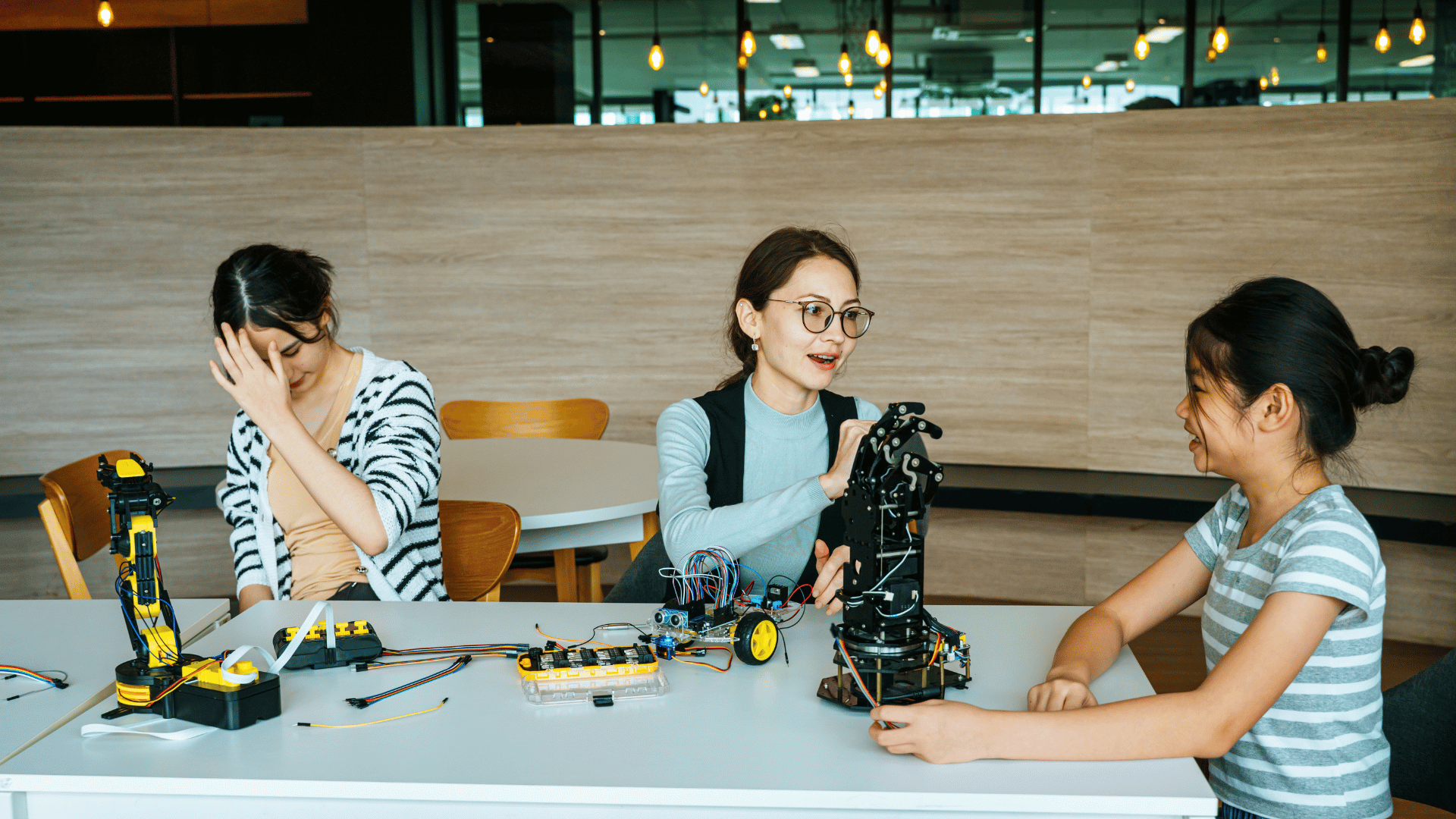
Organizing mock competitions or school visits fosters problem-solving skills in outreach. Teams divide team roles for demos, improving collaborative decision making. Such efforts highlight STEM skills like sensor calibration to peers.
Outreach events align with competition rules from RoboCup Singapore or FIRST Robotics. They build critical thinking by adapting explanations to non-experts. This strengthens DSA applications with evidence of experiential learning.
Practice and Test Your Robot
Inspired by pioneers like Dean Kamen and Dr. Woodie Flowers, teams prepare for competitions like First Robotics Competition (FRC).
Practice and test your robot on the precise test track for specific moves using the Robot App. This setup in Meta workshops mirrors the National Robotics Competition environment in Singapore. Teams refine robot programming and mechanical adjustments through repeated trials.
Mock competitions simulate real competition rules and challenges. Participants debug issues like sensor calibration and Bluetooth connection under time pressure. This builds problem-solving skills and ensures robot efficiency.
The robot app offers tools for monitoring robotic actions in real-time. Teams analyze data from the precise test track to improve accuracy precision. Iterative testing fosters teamwork as members share insights on coding abilities.
During workshops training, mentor guidance helps with LEGO EV3 or Spike kits. Focus on delegation skills by assigning roles for testing phases. This hands-on process strengthens team dynamics for the competitive challenge.
Focus on Efficiency and Accuracy
Focus on robot efficiency and accuracy precision with attention to detail and advanced sensors. Teams in First Robotics Competition Singapore must optimize their robotic creations to meet strict competition rules on the competition field. This sharpens problem-solving skills through iterative design and precise testing.
Sensor calibration plays a key role in achieving reliable performance. Participants use sensors for navigation and obstacle detection, ensuring the robot follows a precise test track with specific moves. Practice testing helps teams refine these elements for a competitive edge.
Robot programming in languages like Python or C++ integrates machine learning for smarter decisions. Teams assign team roles for coding and mechanical design, fostering effective communication and collaborative decision making. Mentor guidance during workshops training ensures alignment with project objectives.
Attention to detail prevents errors in building coding and hardware setup, such as Bluetooth connection for the robot app. Mock competitions simulate real scenarios, building teamwork and critical thinking under pressure. These efforts translate to stronger STEM skills and life skills beyond the event.
Attend Workshops and Training Sessions
Workshops align with standards from IEEE, Science and Technology League, and teams like Wall-East #8540 from UWCSEA, plus Arduino integration for advanced builds.
Join workshops training at IEEE events and ROBEL Prize sessions for top-tier prep for the National Robotics Competition in Singapore. These sessions focus on team collaboration skills essential for the national robotics competition in Singapore. Participants practice robot programming and mechanical design in group settings.
Meta Robotics workshops offer hands-on training with LEGO EV3 and SPIKE kits. Teams learn iterative design through building and testing robotic creations on a competition field. This builds effective communication as members divide team roles for coding and assembly.
UWCSEA and Wall-East #8540 host specialized sessions on problem-solving skills and critical thinking. Attendees tackle mock competitions, refining sensor calibration and robot efficiency. Mentor guidance helps navigate competition rules from the Ministry of Education.
- Practice Python C++ coding for advanced robot actions.
- Explore Machine Learning, AI (Artificial Intelligence) technologies in COBOTS (collaborative robots).
- Develop teamwork via resource management and delegation skills.
- Test accuracy precision on precise test tracks with Bluetooth connection.
Benefits for Team Dynamics
Workshops enhance STEM team dynamics by encouraging collaborative decision making. Teams assign roles based on individual strengths, avoiding silo mentality. This leads to better experiential learning in STEM education.
Participants gain attention to detail through hands-on processes like 3D instructions and 360 instructions. They debug Robot App issues together, boosting coding abilities. Such practice mirrors real NRC robotics competitions.
Practice testing in these sessions improves robot design and project objectives. Teams learn creative building while ensuring security verification against malicious bots. This fosters life skills beyond the competition.
Preparing for Competitions
IEEE events and ROBEL Prize prepare teams for RoboCup Singapore and FIRST Robotics. Sessions cover Blockly coding, coding menu navigation, and team kit assembly. Focus on competitive challenge scenarios builds confidence.
Training emphasizes advanced sensors and robotics trends like COBOTS. Teams simulate robot revolution tasks, honing problem solving. Mock runs improve specific moves and overall robot efficiency.
Incorporate DSA (Direct School Admission) portfolio elements by documenting learning outcomes. This aids in national robotics competition entry. Workshops promote STEM education skills through iterative feedback and peer review.
Key Outcomes
Key outcomes from National Robotics Competition in Singapore include enhanced STEM skills, life skills, coding abilities, and problem solving. Teams in the national robotics competition in Singapore gain hands-on experience that builds confidence and creativity. These results prepare participants for real-world challenges beyond the competition field.
Participants develop teamwork through collaborative decision making and resource management. They learn to assign team roles based on individual strengths, such as mechanical design or robot programming. This process reduces silo mentality and fosters effective communication.
Experiential learning from workshops training and mock competitions sharpens attention to detail. Students practice iterative design, sensor calibration, and practice testing to improve robot efficiency and accuracy precision. Mentor guidance ensures teams meet project objectives.
Outcomes extend to life skills like delegation skills and critical thinking. Exposure to RoboCup Singapore, FIRST Robotics, and IEEE events highlights robotics trends. These experiences strengthen DSA portfolios and inspire interest in research scientists or cobots.
Learning Outcomes
Learning outcomes feature boosted problem-solving skills, critical thinking, and insights into AI, Machine Learning, and robotics trends. In Robotics Competition Singapore, students tackle competitive challenges with LEGO EV3 or Spike kits. They apply STEM education principles to create robotic creations that navigate precise test tracks.
Teams engage in robot design using blockly coding or Python C++ in the coding menu. They focus on building coding for specific moves, robotic actions, and advanced sensors. Competition rules from the Ministry of Education guide their hands-on process.
AI technologies and Machine Learning come alive through team kits and Robot Apps. Students explore Bluetooth connection, 3D instructions, and 360 instructions for robot efficiency. Practice in mock competitions refines accuracy precision and creative building.
These activities build coding abilities and team dynamics. Mentor guidance during workshops training emphasizes effective communication and delegation skills. Participants gain practical knowledge of robot revolution, preparing them for events like the Robel Prize.
Results
Results showcase impressive robotic creations and precise robot actions, with robust security verification against malicious bots. Teams in the national robotics competition in Singapore deliver bots that navigate competition fields with accuracy precision. These outcomes highlight gains in team collaboration skills through real-world challenges.
Robotic creations often feature advanced sensors and machine learning elements for tasks like object detection. Participants apply iterative design to refine mechanical design and robot programming in Python C++. Competition rules ensure fair play, including bot verification processes.
Website security and bot protection measures protect event registrations from malicious bots. Teams practice sensor calibration during workshops training and mock competitions. Success comes from effective communication and collaborative decision making.
Outcomes include enhanced problem-solving skills and critical thinking, as seen in robots executing specific moves on precise test tracks. Mentor guidance supports team dynamics, turning individual strengths into collective wins. These results prepare participants for STEM education and life skills.
Future Plans
Future plans at Meta Robotics include advancing the Robot Revolution with COBOTS, collaborative robots, and C++ training for DSA portfolio. These initiatives aim to prepare teams for upcoming national robotics competition challenges in Singapore. Participants will gain hands-on experience with cobots that work alongside humans.
The program will expand workshops training on collaborative robots and machine learning. Teams can expect sessions on robot programming using Python C++ for advanced tasks. This builds problem-solving skills through real-world applications.
Partnerships with IEEE events and Robocup Singapore will introduce AI technologies and advanced sensors. Mock competitions will simulate competition field scenarios with sensor calibration. Such efforts enhance teamwork and coding abilities.
Growth in the DSA portfolio includes integrating iterative design and mechanical design projects. Students will tackle competitive challenge tasks like precise robot efficiency. These plans foster STEM skills for future robotics competitions.
Frequently Asked Questions
How does Robotics Competition Singapore build team collaboration skills through its events?
Singapore's National Robotics Competition (NRC) and events like RoboCup Singapore build team collaboration skills by requiring participants to work in teams on complex robot-building and programming tasks using SPIKE and LEGO Spike. Teams must divide roles like design, coding, and testing, fostering communication, problem-solving, and mutual support, all while using keywords like 'How Robotics Competition Singapore Builds Team Collaboration Skills' to highlight these benefits in promotional materials for Meta Robotics coding classes for kids, aiding Direct School Admission (DSA) portfolios in Computing & Robotics.
What specific activities in Robotics Competition Singapore enhance team collaboration?
Specific activities such as joint robot assembly with LEGO EV3, real-time debugging under time constraints using Bluetooth and Robot App, and strategy planning sessions in events like Science and Technology League directly enhance team collaboration. These mirror real-world engineering teamwork like COBOTS or ROBEL Prize, teaching kids to listen, delegate, and iterate together with Blockly or 3D instructions, aligning with 'How Robotics Competition Singapore Builds Team Collaboration Skills' in Meta Robotics' educational programs.
Why is Robotics Competition Singapore effective for developing collaboration in kids?
Robotics Competition Singapore, supported by Ministry of Education, is effective because it simulates high-stakes scenarios like FIRST Robotics where failure in one area affects the whole team, compelling kids to collaborate closely. This hands-on approach in coding and robotics classes with Arduino promotes empathy and shared success, as emphasized in 'How Robotics Competition Singapore Builds Team Collaboration Skills' for young learners in Singapore.
How do teams in Robotics Competition Singapore learn to resolve conflicts collaboratively?
Teams learn conflict resolution in NRC or FRC through guided debriefs after challenges, inspired by pioneers like Dean Kamen and Dr. Woodie Flowers, where they discuss what went wrong and brainstorm fixes together. This structured reflection builds emotional intelligence and consensus-building, key to understanding 'How Robotics Competition Singapore Builds Team Collaboration Skills' and building a DSA portfolio in Meta Robotics' kid-focused courses.
In what ways does participating in Robotics Competition Singapore improve communication for team collaboration?
Participating improves communication by necessitating clear instructions during Robot Revolution robot operation and design reviews in Robotics Competition Singapore. Kids practice articulating ideas and giving constructive feedback, essential skills detailed in 'How Robotics Competition Singapore Builds Team Collaboration Skills' to prepare students for future teamwork via coding classes, perhaps sharing on Hashnode.
How Robotics Competition Singapore Builds Team Collaboration Skills for long-term benefits?
Robotics Competition Singapore, akin to teams like Wall-East #8540 from UWCSEA, builds lasting team collaboration skills by embedding habits like peer mentoring and adaptive planning into its format, benefiting kids beyond competitions. These skills translate to school projects and careers, as explored in 'How Robotics Competition Singapore Builds Team Collaboration Skills' within Meta Robotics' Singapore-based programs for children.