
Robotics Class: When Your Child Should Start
Many parents wonder when their child should first step into a robotics class.
Most children can handle a structured robotics lesson from around ages five to seven, once they can follow simple steps and stay focused. Younger kids in Singapore can join play‑based pre‑robotics groups from about age three, while older primary or secondary students can start at any time and still gain strong benefits.
The right starting point depends less on age and more on attention span, curiosity, and fine motor control. This article explains what a robotics class covers, how age‑based programs work in Singapore, what skills your child gains, and how Meta Robotics Singapore uses its NEBULA Neuro‑Builder model to guide progress.
You will also see how to judge program quality, compare options, and choose a trial that fits your child and your family schedule.
Key Takeaways
Before looking at details, it helps to see the main ideas in one place.
- Age‑aligned stages let children start robotics between three and sixteen without feeling lost. Each bracket focuses on different goals, from playful LEGO builds to advanced coding and sensors, keeping children challenged yet comfortable.
- A strong robotics curriculum follows a clear sequence rather than random projects. It builds logic, creativity, and resilience together, so children gain more than coding tricks and strengthen both school subjects and long‑term confidence.
- Meta Robotics Singapore applies its NEBULA Neuro‑Builder model to structure progress and track growth in thinking skills. Parents can look for this kind of framework when comparing centres and use trial classes to see how their child responds in real lessons.
What Is A Robotics Class And Why Does It Matter For Your Child?
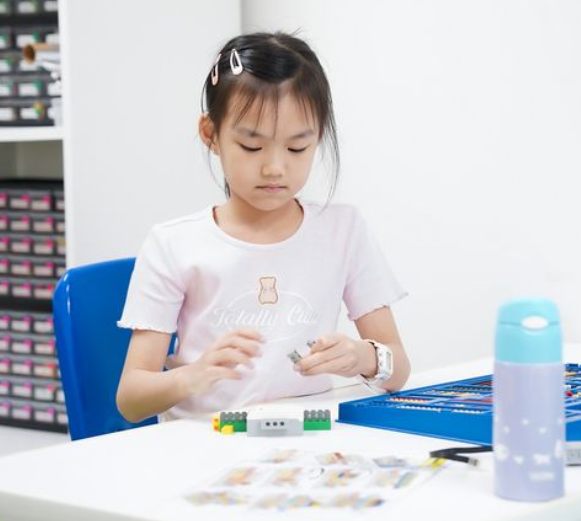
A robotics class is a guided STEM program where children design, build, and program simple robots in small groups. Kids combine LEGO‑style building sets, beginner‑friendly coding tools, and step‑by‑step challenges so they learn logic and creativity together. The focus is on solving problems, not just copying an instruction sheet.
Instead of only reading about science or maths, students apply those ideas to real tasks, an approach supported by research on project-based learning with Arduino robots that shows measurable gains in student achievement and persistence. They might measure distance for a line‑following robot or use angles to turn a robot car accurately. This link between code, movement, and outcome helps many children remember school topics more clearly and feel less anxious about harder subjects.
For Singapore families, robotics fits well with the Ministry of Education focus on computational thinking and the national Smart Nation push. According to the World Economic Forum, about sixty‑five percent of children now in primary school will work in jobs that do not yet exist. Early comfort with robots, sensors, and code gives your child a head start in this changing work scene.
Robotics programs also build everyday habits that matter at home and in school. Children practise patience when their design fails, teamwork when they share kits, and clear speaking when they explain their robot to friends or judges. These character gains sit alongside technical content and stay useful long after each class ends.
Which Robotics Class Is Right For Your Child's Age And Level?
Choosing the right robotics class in Singapore works best when you match age, attention span, and current skills. Centres, including Meta Robotics Singapore, usually group students by narrow age bands so each child meets projects that feel reachable yet still exciting.
At Meta Robotics Singapore, the Adapter Programme guides ages three to four through LEGO brick activities that touch early science and maths. The Ranker Programme for ages five to six introduces robotics and coding in a playful way that also supports focus and patience. The High Ranker Programme for ages seven to nine raises the bar with multi‑step builds and richer challenges that prepare students for upper primary work.
Older children then move into more advanced levels that add richer coding, more sensors, and structured project planning. Even if your child starts late, a clear pathway lets them join at the right point and move forward step by step, instead of repeating the same easy tasks.
What Makes The NEBULA™ Model Different From Standard Enrichment Classes?
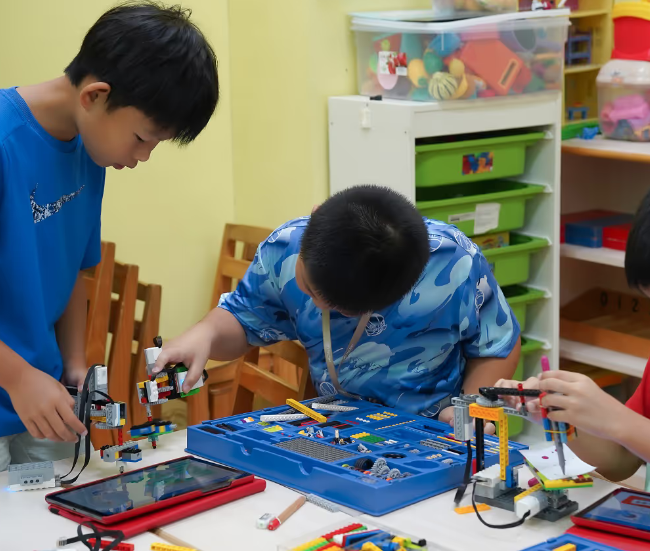
The NEBULA Neuro‑Builder model at Meta Robotics Singapore acts as a roadmap for how children think and grow through robotics. Rather than treating coding skill as the only target, this framework sets goals for confidence, resilience, focus, and problem‑solving at every stage. Teachers plan each lesson to stretch both thinking and character.
LEGO‑based hands‑on work remains the main medium because it feels familiar and safe for kids, and studies on unlocking student creativity through robotics-enhanced programs confirm that story-driven, playful builds are effective for developing imagination and engagement. Yet every build links back to NEBULA goals, such as staying calm when a robot fails or explaining an idea step by step. Parents then see progress not only in finished robots, but also in how their child handles tricky homework or social situations. This wider focus sets NEBULA‑style classes apart from toy‑driven programs that simply follow manuals.
What Skills Does A Quality Robotics Class Actually Build?
A quality robotics class builds a stack of skills that help far beyond the lesson room. The right program grows technical knowledge and life skills together, so children feel more capable in school, friendships, and later work. Research from the World Economic Forum highlights analytical thinking, creativity, and technology design among the top skills employers value, and robotics touches all three.
"People learn best when they are actively engaged in constructing something that is meaningful to them."
Mitchel Resnick, Professor of Learning Research at MIT Media Lab
Below are key skill pillars to look for.
- Mechanical Thinking And Spatial Reasoning
Children learn how gears, wheels, and levers interact, even if they do not know all the terms yet. They start to predict what will happen when they change a design, such as adding a longer arm or extra support. This cause‑and‑effect thinking later supports geometry, physics, and design.
- Programming And Computational Logic
Through block‑based tools like Scratch, kids learn to break big goals into smaller steps a robot can follow, a foundational approach documented in resources on first-principle robot building in undergraduate education that traces how layered learning progressively develops computational thinking. They see how loops, conditions, and variables change what the robot does in different situations. Later, moving into languages like Python feels less intimidating because the thinking pattern is already familiar.
- Electronics Basics And Sensor Awareness
Many classes introduce simple sensors such as light, distance, or colour detectors, and research on a symmetry-informed multimodal LLM-driven approach to robotic object manipulation shows how lowering entry barriers in mechatronics education makes sensor interaction accessible to learners at all levels. Students see how changing a sensor reading changes the robot’s action, which links directly to real systems like automatic doors or warehouse robots. This early comfort with sensors and circuits helps them read about hardware or engineering with less confusion.
- Teamwork And Communication
Most robotics work happens in pairs or small teams. Children learn to share kits, divide roles, and speak up when they have an idea or spot an error. Presenting their project to the class or at a school showcase also builds the habit of explaining technical ideas in clear, simple language.
- Growth Mindset And Resilience
Robots almost never work perfectly on the first attempt. Students get used to testing, failing, adjusting, and trying again without feeling ashamed. Over time, they start to see mistakes as feedback instead of proof that they are not smart, and that attitude often spreads to maths tests, sports, and music practice.
How To Choose A Robotics Class In Singapore That Delivers Real Results
Picking a robotics class that truly helps your child grow takes more than glossy photos or catchy taglines. Parents can run a few grounded checks to cut through the marketing talk and focus on what happens in the classroom. The McKinsey Global Institute estimates that roughly half of current work activities could be automated with existing technology, so classes that teach real problem‑solving matter for your child’s future security.
"The role of the teacher is to create the conditions for invention rather than provide ready made knowledge."
Seymour Papert, Mathematician and Education Pioneer at MIT
Here are five clear checks that help.
- Instructor Qualifications And Teaching Style
Look for teachers with experience in engineering, computing, or education, not just casual helpers. Strong instructors ask guiding questions instead of fixing every bug for the child, which keeps students thinking. When you visit, notice whether children look relaxed and curious while still staying on task.
- Curriculum Progression And Age Alignment
Good programs show a level map that moves from simple builds to more open‑ended projects, a progression model well supported by academic frameworks such as the Robotic System Levels Model that outlines how structured scaffolding guides learners from basic assembly to independent engineering. You should see new ideas each term rather than the same kit with a different theme. Meta Robotics Singapore, for example, uses the NEBULA framework to keep raising the thinking load in a planned way as children grow.
- Class Size And Student Support
Smaller groups let teachers notice quiet children and give timely help when a robot fails. A range of eight to twelve students per instructor usually offers enough energy for teamwork without letting anyone disappear in the crowd. When you visit, check whether teachers walk around and talk to every child, not just the confident ones.
- Equipment Quality And Relevance
High‑quality kits, laptops, and coding platforms show that the centre invests in learning, not only decor. Tools that relate to industry, such as Arduino boards or Scratch‑style coding linked to real sensors, prepare older students for future courses. Constant equipment problems can slow lessons and frustrate children.
- Track Record, Competitions, And Transparency
Many strong centres take part in events such as the National Robotics Competition run by Science Centre Singapore or the World Robot Olympiad Singapore. You can also read parent reviews on platforms like KiasuParents and Google. Providers that explain fees, curriculum, and outcomes clearly on their websites give parents the confidence to make informed decisions before booking a trial.
The Smart Parent's Next Step Secure Your Child's Spot Today
The right robotics class helps your child think more clearly, stay curious about science, and feel confident facing new technology. Instead of only memorising facts, they see how ideas turn into working machines, which lays a strong base for higher studies and future careers.
Meta Robotics Singapore offers age‑based programs from preschool to teens, guided by the NEBULA Neuro‑Builder model and LEGO‑focused hands‑on projects. A practical next move is to book a trial lesson at the centre nearest your home, such as Bukit Timah, Jurong East, Katong, Novena, Punggol, Tiong Bahru, or Upper Thomson. One trial lets your child feel the class environment while you observe teaching quality before committing to a full term.
Frequently Asked Questions
Question 1: At what age should my child start a robotics class?
The best starting window for structured robotics is usually between ages five and seven. Many Singapore centres, including Meta Robotics Singapore, also offer playful early STEM and pre‑robotics groups from age three to four. Older children can join at any time, as good programs place them by level as well as age.
Question 2: How much does a robotics class in Singapore typically cost?
Most weekly robotics programs in Singapore fall between about SGD 150 and SGD 400 per month. Fees vary based on class length, teacher experience, equipment used, and location. Parent communities such as KiasuParents share current rates and reviews, and many centres offer trial classes so you can judge value before signing up.
Question 3: Do children need prior coding experience to join a robotics class?
No prior coding is needed for beginner and early‑childhood programs. Introductory classes use visual, block‑based coding and simple robots that let complete newcomers succeed quickly. As confidence grows, children move into more advanced blocks and then text‑based languages, always with guidance matched to their pace.
Question 4: How is a robotics class different from a regular coding class?
A robotics class combines physical building, electronics, and programming in one project. Children see how code makes motors move and sensors react in the real world, which strengthens mechanical thinking and spatial reasoning. Pure coding lessons focus more on on‑screen logic, which is helpful but less tactile for many young learners.
Question 5: What competitions can my child participate in after joining a robotics class?
After some experience, children can join events such as the National Robotics Competition, World Robot Olympiad Singapore, VEX Robotics Competition, and First LEGO League. These contests challenge students to design robots for specific missions and present their ideas to judges, which builds resilience, teamwork, and, for teens, future university applications.
Conclusion
A well‑chosen robotics class does far more than teach children how to build a cute robot. It trains them to think in clear steps, test ideas, and keep going when plans fail traits that matter in a work scene shaped by automation and artificial intelligence, as explored in studies on LLM-powered human-robot interactions that highlight how students who engage repeatedly with intelligent systems develop stronger adaptive thinking skills. For parents in Singapore, this kind of learning also supports the goals behind national efforts like SkillsFuture and Smart Nation.
Meta Robotics Singapore adds another layer through its NEBULA Neuro‑Builder model, which places confidence, focus, and resilience on the same level as coding skills. That mix can help children who struggle with traditional classrooms rediscover their love for learning. As you review options, look for transparent information, thoughtful curricula, and trial lessons that let your child experience the class firsthand.