
Robotics Class in Singapore: What Parents Should Know by Age and Skill Level
Choosing a robotics class in Singapore is easier when you match the programme to your child’s age, attention span, and learning stage. A good class should feel hands-on, structured, and age-appropriate. Children should not only follow instructions; they should build, test, make mistakes, and improve their ideas.
Meta Robotics offers robotics and coding programmes for children from ages 3 to 16, using guided projects to develop logical thinking, focus, resilience, and problem-solving through its NEBULA™ learning model.
What Is a Robotics Class?
A robotics class teaches children how to design, build, code, and test working robot models. Instead of learning only from worksheets, students use physical builds and coding tasks to understand Science, Mathematics, Design, and Technology concepts.
In a typical class, children may:
- Build simple machines or robot models
- Use motors, sensors, and moving parts
- Create basic coding instructions
- Test whether the robot works as expected
- Fix mistakes through trial and improvement
- Explain their project to teachers or classmates
This kind of learning helps children connect ideas to real outcomes. When a robot moves, stops, turns, or reacts, children can see how their thinking affects the result.
What Age Should a Child Start Robotics?
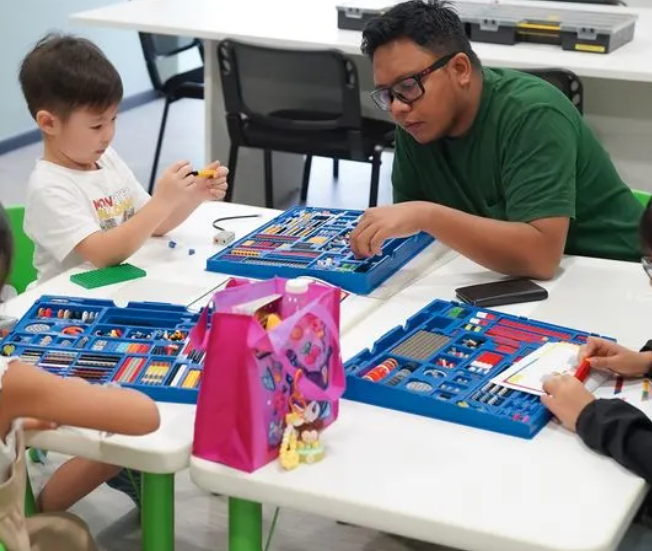
Children can begin robotics as early as age 3 if the class is play-based and developmentally suitable. At this age, the focus should be on curiosity, hand control, shapes, colours, counting, and simple cause-and-effect activities.
Meta Robotics’ Adapter Programme is designed for ages 3 to 4 and introduces Science and Mathematics through hands-on brick activities. It supports fine motor skills, visual-spatial awareness, language development, social interaction, and early curiosity.
Robotics Programmes by Age Group
Ages 3 to 4: Early Exploration
At this stage, children need guided play rather than formal coding. They learn by touching, building, sorting, and copying patterns.
The goal is to build confidence and comfort with structured activities. Children start to understand that each part has a purpose and that simple actions can create visible results.
Ages 5 to 6: First Coding and Robotics Concepts
Children around ages 5 to 6 can usually handle more structured lessons. They can follow short instructions, build simple models, and begin using basic coding ideas.
Meta Robotics’ Ranker Programme is designed for ages 5 to 6 and introduces Robotics, STEM, Coding, and Animation. It focuses on creativity, problem-solving, confidence, patience, focus, and early technology readiness.
Ages 7 to 9: Building Strong Foundations
Lower primary students are ready for deeper challenges. They can work through multi-step projects, understand simple algorithms, and troubleshoot when something does not work.
Meta Robotics’ High Ranker Programme is for ages 7 to 9 and includes Robotics, Coding, Games, and Animation. The programme helps children explore Science, Mathematics, Coding, and Design through hands-on learning.
Ages 10 to 12: Project Work and DSA Preparation
Upper primary students can begin more serious project work. This is the stage where robotics may support school portfolios, competition exposure, and Direct School Admission preparation.
Meta Robotics offers a DSA preparation pathway for ages 9 to 12 with 45 hours of hands-on training in Robotics, Coding, and STEM, including preparation for competitions.
Ages 13 and Above: Advanced Robotics and Coding
Teenagers can handle more advanced concepts such as complex coding, design thinking, sensors, automation, and applied project work.
Meta Robotics’ King Programme is designed for ages 13 and above. It includes integrated modules that deepen students’ understanding of Science, Mathematics, Coding, Design, and evolving technology.
What Skills Does Robotics Build?
Robotics classes build both technical and personal skills.
Children develop:
- Logical thinking
- Problem-solving
- Creativity
- Patience and focus
- Fine motor control
- Visual-spatial awareness
- Teamwork
- Communication
- Confidence in handling new technology
The most valuable part is the habit of testing and improving. When a robot does not work, children learn to ask why, adjust their design, and try again.
How to Choose the Right Robotics Class in Singapore
Before choosing a class, ask these questions:
- Is the programme suitable for my child’s age?
- Are the learning outcomes clearly explained?
- Will my child build and code during class?
- Is there a clear path to the next level?
- Are trial classes available?
- Does the programme support long-term growth?
Meta Robotics provides age-based pathways from Adapter to Ranker, High Ranker, Ace, King, holiday workshops, and DSA preparation, giving families a clearer view of how children can progress over time.
FAQ
What is the best age to start robotics in Singapore?
Children can start robotics from around age 3 if the class is play-based. More structured robotics and coding usually suit children from ages 5 to 6.
Is robotics suitable for preschool children?
Yes. Preschool robotics should focus on hands-on play, shapes, movement, counting, simple building, and guided discovery rather than complex coding.
Can robotics help with DSA in Singapore?
Yes. Robotics can support DSA preparation when students build strong project portfolios, develop coding skills, and gain competition experience.
What should parents look for in a robotics class?
Parents should look for age-based levels, hands-on projects, clear learning outcomes, patient instructors, trial class options, and a pathway for continued progress.